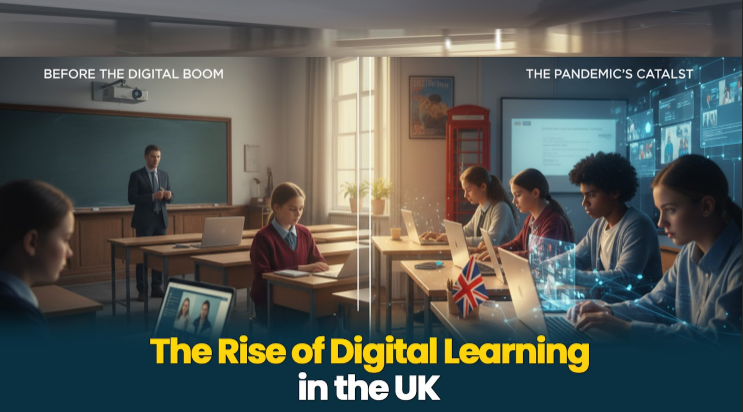
How Modern UK Students are Mastering Time Management in the Digital Age

The life of a modern student in the UK is a whirlwind of lectures, seminars, part-time shifts, and the occasional—but necessary—social night out at the Student Union. However, beneath the surface of this bustling academic life lies a challenge that previous generations didn’t have to face in the same way: the digital paradox. We live in an era where technology provides us with every tool imaginable to be productive, yet it simultaneously offers the greatest distractions known to man.
Walk into any library at the University of Manchester or a coffee shop in Bloomsbury, and you’ll see the same sight: students with dual monitors, tablets, and smartphones all buzzing at once. Mastering time management today isn’t just about buying a paper planner; it’s about navigating a digital landscape without getting lost in the weeds.
The Evolution of the Academic Hustle
Ten years ago, time management meant carrying a heavy Filofax and highlighting a physical syllabus. Today, the “hustle” is digital. UK students are increasingly adopting a “Tech-First” mindset to handle their workloads. With the rising costs of living and tuition, the stakes have never been higher. Every hour spent procrastinating is an hour that could have been spent on a high-quality assignment or a paid shift.
This pressure has birthed a new breed of student—one who treats their degree like a project management task. They aren’t just “studying”; they are optimizing. From using Notion to track every module to utilizing expert academic resources to streamline their learning process, the goal is efficiency.
The Digital Paradox: Friend or Foe?
The biggest hurdle is, undoubtedly, the smartphone. It is both the most powerful research tool and the most dangerous time-sink. Apps like TikTok and Instagram are engineered to capture attention, often leading to the dreaded “scroll hole” just when a 2,000-word essay is due.
However, savvy students are fighting fire with fire. Instead of shunning technology, they are using “Focus Mode” settings and browser extensions that block distracting sites during study hours. This level of self-regulation is the hallmark of a successful modern student. They understand that willpower is a finite resource, and they use digital boundaries to protect it.
Proven Strategies for the Modern Scholar
So, how are the top-performing students actually managing it all? It’s rarely about working harder; it’s about working smarter.
1. The “Time Blocking” Method
Rather than a vague “to-do” list, students are now blocking out specific hours in their Google Calendars for specific tasks. This includes “Deep Work” sessions where the phone is in another room. By assigning a specific time slot to a task, you eliminate the mental fatigue of deciding what to do next.
2. Leveraging Specialized Support
The complexity of modern curricula, especially in the sciences and humanities, often requires more than just a textbook. Many students find that they can save dozens of hours by seeking professional guidance. Whether it’s clarifying a complex theory or getting research paper help to structure a thesis correctly, knowing when to ask for help is a vital time-management skill. It’s about recognizing that your time is valuable and sometimes, expert intervention is the most efficient path forward.
3. The Pomodoro Technique 2.0
The old-school 25-minute timer is still a favorite, but it’s been updated. Students now use “Study Stream” platforms to work alongside peers globally in virtual libraries. This sense of “body doubling” keeps them accountable and prevents the isolation that often leads to procrastination.
See also: Advancing Health and Wellness in Modern Society
Mental Health and the “Productivity Guilt”
One aspect of time management often ignored is the psychological toll. In the UK, there is a growing conversation around “productivity guilt”—the feeling that if you aren’t studying, you’re failing.
True mastery of time includes scheduled downtime. The most successful students are those who treat rest as a non-negotiable part of their schedule. They know that a burnt-out brain cannot produce a first-class essay. By scheduling “off-grid” time, they return to their desks with more clarity and speed, ultimately saving time in the long run.
Quality Over Quantity: The Importance of Reliability
In the digital age, information is everywhere, but quality is scarce. When students look for external resources or academic assistance, they have become incredibly discerning. They don’t just click on the first link they see; they look for social proof.
Before committing to any study tool or service, smart students check real student reviews to see what their peers are saying. This prevents the ultimate time-waster: using a low-quality resource that results in having to redo the work later. In the world of UK higher education, getting it right the first time is the ultimate time-saving hack.
Navigating the Research Labyrinth
Research is often where the most time is lost. Sifting through JSTOR, Google Scholar, and university archives can take days. Modern students are now using AI-powered search tools and citation managers like Zotero to automate the “busy work” of referencing.
By automating the mechanical parts of writing—like formatting a bibliography in Harvard or APA style—students can focus their mental energy on the actual arguments and critical thinking. This shift from “manual labor” to “intellectual strategy” is what separates the modern student from their predecessors.
The Role of Environment
While the world is digital, the physical environment still matters. The rise of “study-grams” and “study-tubers” has highlighted the importance of a curated workspace. A clean desk, a good pair of noise-canceling headphones, and a stable Wi-Fi connection are the “office supplies” of the 21st century.
Many students in London or Manchester are also opting for co-working spaces or quiet zones in public libraries to escape the distractions of their shared student housing. Changing your physical location can often act as a mental “reset” button, instantly boosting productivity.
Future-Proofing Your Habits
The skills UK students are learning now—managing digital distractions, using software to streamline workflows, and knowing when to outsource tasks to experts—are exactly the skills needed in the modern workplace.
The “Digital Age” isn’t going anywhere. If anything, the pace of life will only increase. By mastering these time management techniques today, students aren’t just passing their modules; they are training themselves for a career in an increasingly fast-paced world.
Conclusion
Mastering time management in the modern era isn’t about being a robot. It’s about being a strategist. It’s about knowing which tools to use, which distractions to block, and when to reach out for professional support to stay on track.
The UK academic landscape is competitive and demanding, but for the student who knows how to command their calendar and leverage the digital tools at their disposal, the rewards are immense. Remember, the clock is always ticking—the question is, are you chasing it, or are you the one in control?